Fallser Kitchen · April 1997
Basic kitchen herbs and their history
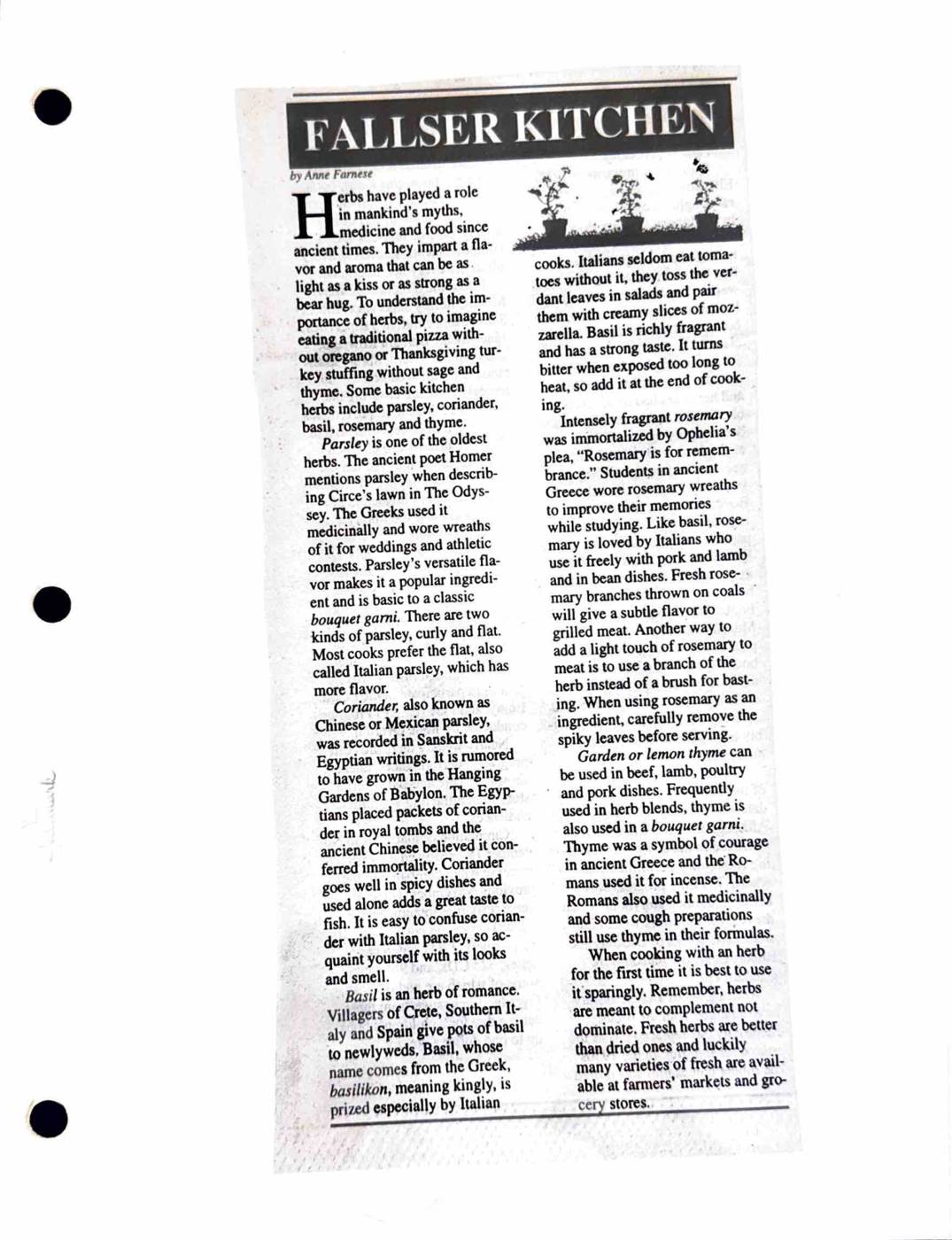
Herbs have played a role in mankind's myths, medicine and food since ancient times. They impart a flavor and aroma that can be as light as a kiss or as strong as a bear hug. To understand the importance of herbs, try to imagine eating a traditional pizza without oregano or Thanksgiving turkey stuffing without sage and thyme. Some basic kitchen herbs include parsley, coriander, basil, rosemary and thyme.
Parsley is one of the oldest herbs. The ancient poet Homer mentions parsley when describing Circe's lawn in The Odyssey. The Greeks used it medicinally and wore wreaths of it for weddings and athletic contests. Parsley's versatile flavor makes it a popular ingredient and is basic to a classic bouquet garni. There are two kinds of parsley, curly and flat. Most cooks prefer the flat, also called Italian parsley, which has more flavor.
Coriander, also known as Chinese or Mexican parsley, was recorded in Sanskrit and Egyptian writings. It is rumored to have grown in the Hanging Gardens of Babylon. The Egyptians placed packets of coriander in royal tombs and the ancient Chinese believed it conferred immortality. Coriander goes well in spicy dishes and used alone adds a great taste to fish. It is easy to confuse coriander with Italian parsley, so acquaint yourself with its looks and smell.
Basil is an herb of romance. Villagers of Crete, Southern Italy and Spain give pots of basil to newlyweds. Basil, whose name comes from the Greek, basilikon, meaning kingly, is prized especially by Italian cooks. Italians seldom eat tomatoes without it, they toss the verdant leaves in salads and pair them with creamy slices of mozzarella. Basil is richly fragrant and has a strong taste. It turns bitter when exposed too long to heat, so add it at the end of cooking.
Intensely fragrant rosemary was immortalized by Ophelia's plea, "Rosemary is for remembrance." Students in ancient Greece wore rosemary wreaths to improve their memories while studying. Like basil, rosemary is loved by Italians who use it freely with pork and lamb and in bean dishes. Fresh rosemary branches thrown on coals will give a subtle flavor to grilled meat. Another way to add a light touch of rosemary to meat is to use a branch of the herb instead of a brush for basting. When using rosemary as an ingredient, carefully remove the spiky leaves before serving.
Garden or lemon thyme can be used in beef, lamb, poultry and pork dishes. Frequently used in herb blends, thyme is also used in a bouquet garni. Thyme was a symbol of courage in ancient Greece and the Romans used it for incense. The Romans also used it medicinally and some cough preparations still use thyme in their formulas.
When cooking with an herb for the first time it is best to use it sparingly. Remember, herbs are meant to complement not dominate. Fresh herbs are better than dried ones and luckily many varieties of fresh are available at farmers' markets and grocery stores.
View the original clipping
ingredients-spotlight techniques-tips