Fallser Kitchen · June 1997
Choosing and using graters
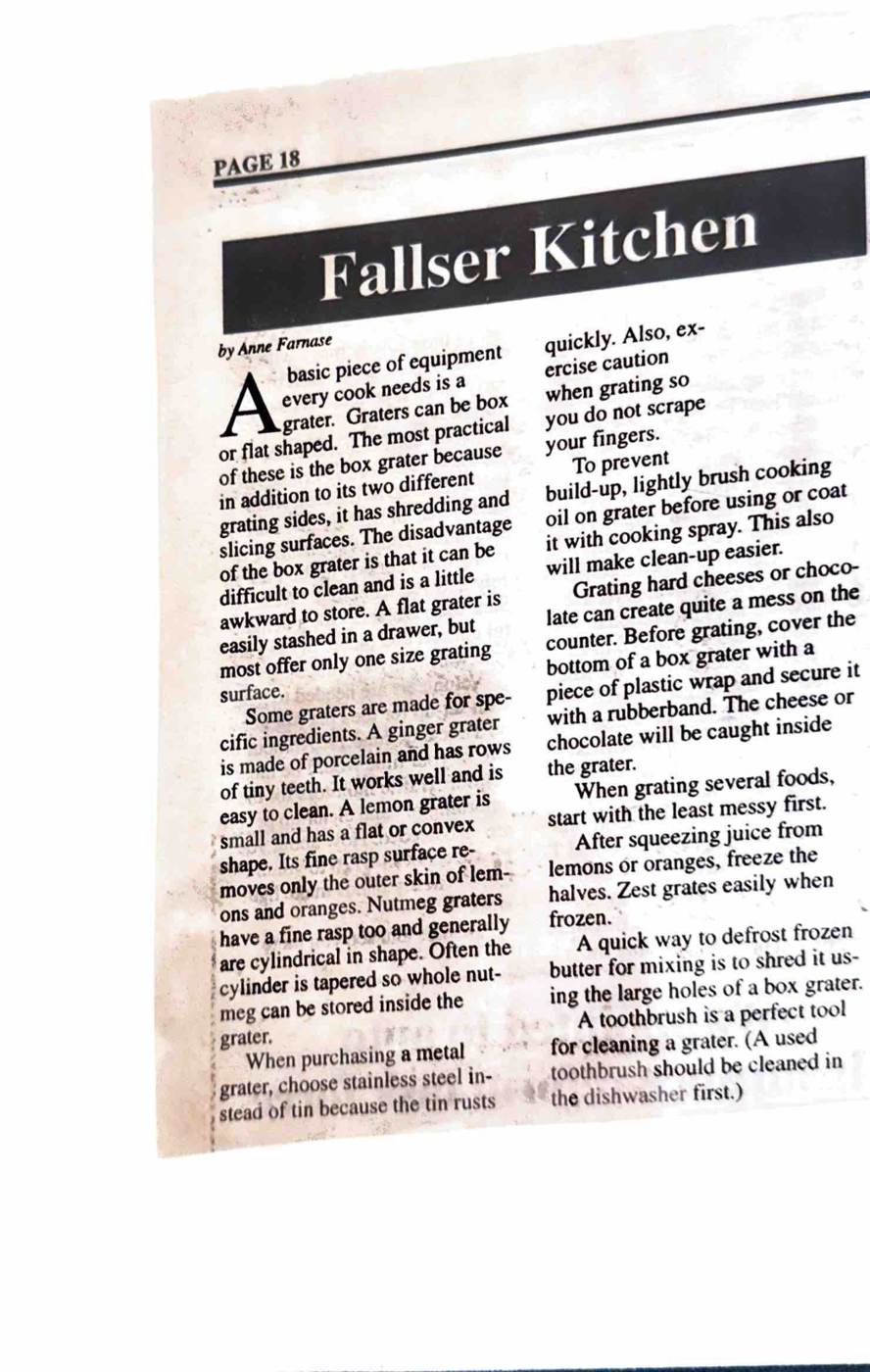
A basic piece of equipment every cook needs is a grater. Graters can be box or flat shaped. The most practical of these is the box grater because in addition to its two different grating sides, it has shredding and slicing surfaces. The disadvantage of the box grater is that it can be difficult to clean and is a little awkward to store. A flat grater is easily stashed in a drawer, but most offer only one size grating surface.
Some graters are made for specific ingredients. A ginger grater is made of porcelain and has rows of tiny teeth. It works well and is easy to clean. A lemon grater is small and has a flat or convex shape. Its fine rasp surface removes only the outer skin of lemons and oranges. Nutmeg graters have a fine rasp too and generally are cylindrical in shape. Often the cylinder is tapered so whole nutmeg can be stored inside the grater.
When purchasing a metal grater, choose stainless steel instead of tin because the tin rusts quickly. Also, exercise caution when grating so you do not scrape your fingers.
To prevent build-up, lightly brush cooking oil on grater before using or coat it with cooking spray. This also will make clean-up easier.
Grating hard cheeses or chocolate can create quite a mess on the counter. Before grating, cover the bottom of a box grater with a piece of plastic wrap and secure it with a rubberband. The cheese or chocolate will be caught inside the grater.
When grating several foods, start with the least messy first.
After squeezing juice from lemons or oranges, freeze the halves. Zest grates easily when frozen.
A quick way to defrost frozen butter for mixing is to shred it using the large holes of a box grater.
A toothbrush is a perfect tool for cleaning a grater. (A used toothbrush should be cleaned in the dishwasher first.)
View the original clipping
techniques-tips