Fallser Kitchen · June 1998
Lemons: buying, storing, juicing
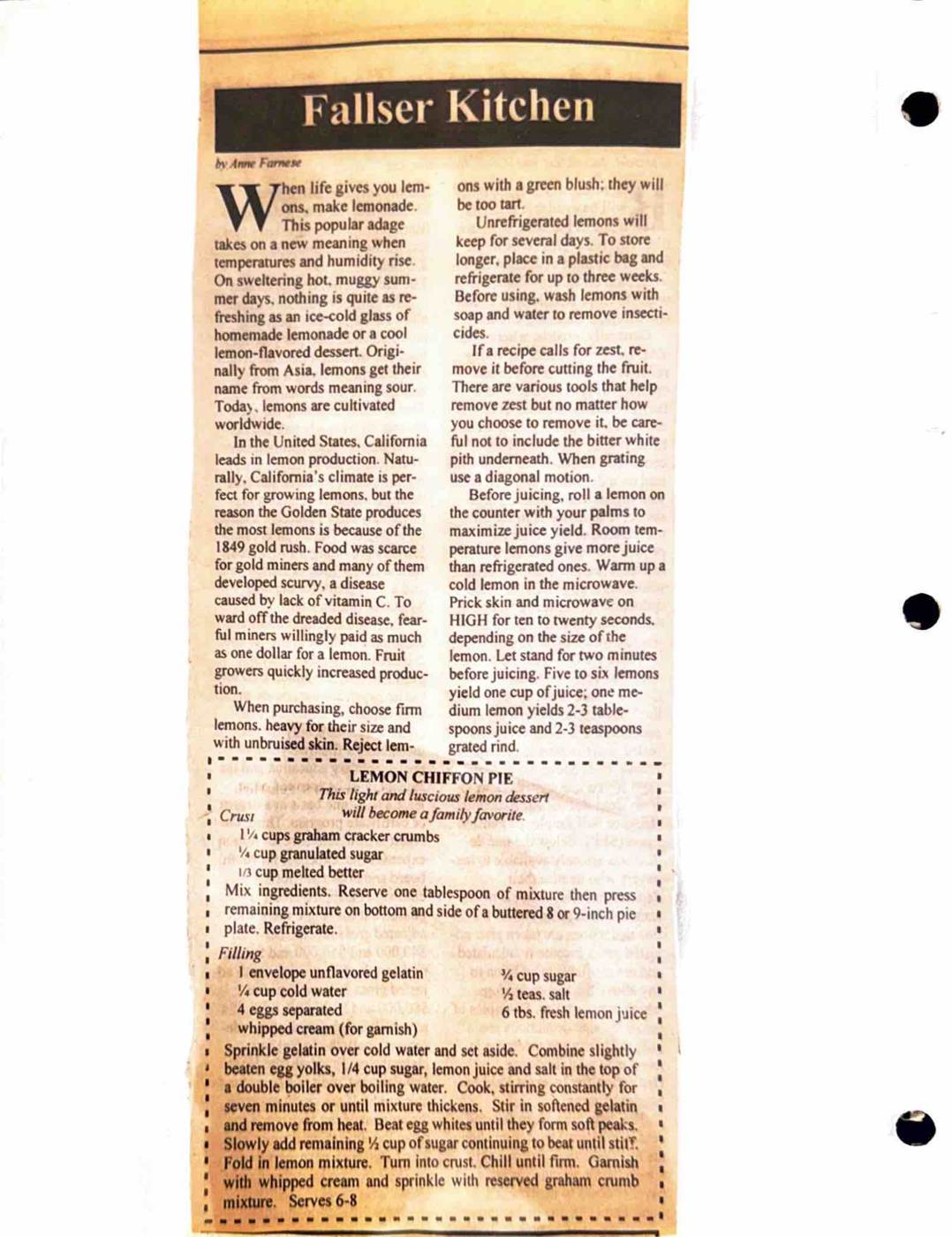
When life gives you lemons, make lemonade. This popular adage takes on a new meaning when temperatures and humidity rise. On sweltering hot, muggy summer days, nothing is quite as refreshing as an ice-cold glass of homemade lemonade or a cool lemon-flavored dessert. Originally from Asia, lemons get their name from words meaning sour. Today, lemons are cultivated worldwide.
In the United States, California leads in lemon production. Naturally, California's climate is perfect for growing lemons, but the reason the Golden State produces the most lemons is because of the 1849 gold rush. Food was scarce for gold miners and many of them developed scurvy, a disease caused by lack of vitamin C. To ward off the dreaded disease, fearful miners willingly paid as much as one dollar for a lemon. Fruit growers quickly increased production.
When purchasing, choose firm lemons, heavy for their size and with unbruised skin. Reject lemons with a green blush; they will be too tart.
Unrefrigerated lemons will keep for several days. To store longer, place in a plastic bag and refrigerate for up to three weeks. Before using, wash lemons with soap and water to remove insecticides.
If a recipe calls for zest, remove it before cutting the fruit. There are various tools that help remove zest but no matter how you choose to remove it, be careful not to include the bitter white pith underneath. When grating use a diagonal motion.
Before juicing, roll a lemon on the counter with your palms to maximize juice yield. Room temperature lemons give more juice than refrigerated ones. Warm up a cold lemon in the microwave. Prick skin and microwave on HIGH for ten to twenty seconds, depending on the size of the lemon. Let stand for two minutes before juicing. Five to six lemons yield one cup of juice; one medium lemon yields 2-3 tablespoons juice and 2-3 teaspoons grated rind.
Lemon Chiffon Pie
This light and luscious lemon dessert will become a family favorite.
Crust
- 1¼ cups graham cracker crumbs
- ¼ cup granulated sugar
-
⅓ cup melted butter
-
Mix ingredients. Reserve one tablespoon of mixture then press remaining mixture on bottom and side of a buttered 8 or 9-inch pie plate. Refrigerate.
Filling
- 1 envelope unflavored gelatin
- ¼ cup cold water
- 4 eggs separated
- whipped cream (for garnish)
- ¾ cup sugar
- ½ teas. salt
-
6 tbs. fresh lemon juice
-
Sprinkle gelatin over cold water and set aside.
- Combine slightly beaten egg yolks, ¼ cup sugar, lemon juice and salt in the top of a double boiler over boiling water. Cook, stirring constantly for seven minutes or until mixture thickens. Stir in softened gelatin and remove from heat.
- Beat egg whites until they form soft peaks. Slowly add remaining ½ cup of sugar continuing to beat until stiff. Fold in lemon mixture.
- Turn into crust. Chill until firm. Garnish with whipped cream and sprinkle with reserved graham crumb mixture. Serves 6-8
View the original clipping
fruits ingredients-spotlight desserts