Fallser Kitchen · November 2001
Thanksgiving turkey food safety
It's turkey time again. Time to dig out and clean the extra-large roasting pan; time to search in the back of the kitchen drawer for the bulb baster; time to get the gravy boat from the top shelf and give it a good wash; time to sharpen the carving knife; time to go a little crazy with all that has to be done to get ready for the Thanksgiving feast. But as you get ready to delight guests with a holiday meal worth remembering, don't forget to pay attention to food-safety.
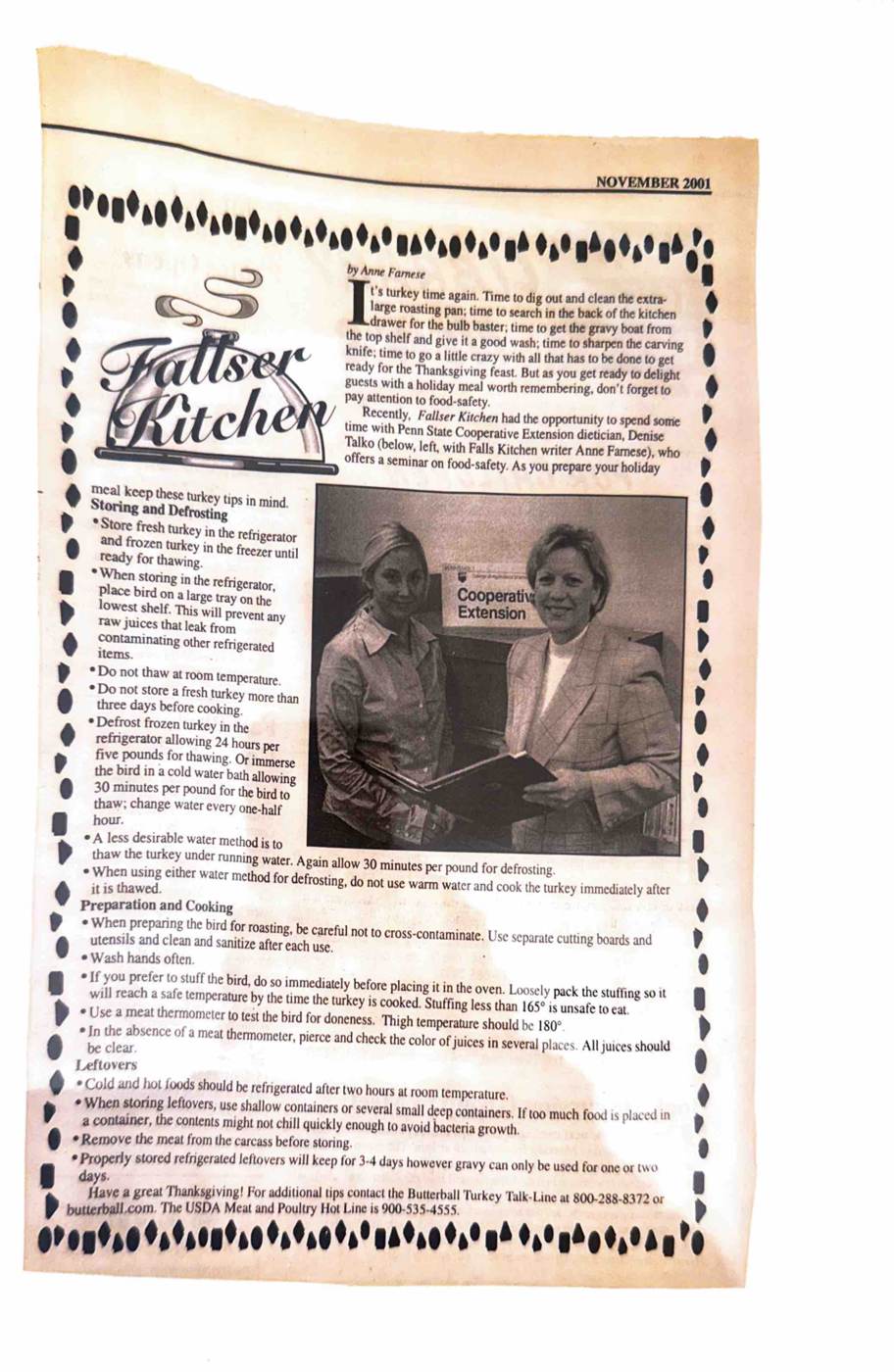
Recently, Fallser Kitchen had the opportunity to spend some time with Penn State Cooperative Extension dietician, Denise Talko (below, left, with Falls Kitchen writer Anne Farnese), who offers a seminar on food-safety. As you prepare your holiday meal keep these turkey tips in mind.
Storing and Defrosting
- Store fresh turkey in the refrigerator and frozen turkey in the freezer until ready for thawing.
- When storing in the refrigerator, place bird on a large tray on the lowest shelf. This will prevent any raw juices that leak from contaminating other refrigerated items.
- Do not thaw at room temperature.
- Do not store a fresh turkey more than three days before cooking.
- Defrost frozen turkey in the refrigerator allowing 24 hours per five pounds for thawing. Or immerse the bird in a cold water bath allowing 30 minutes per pound for the bird to thaw; change water every one-half hour.
- A less desirable water method is to thaw the turkey under running water. Again allow 30 minutes per pound for defrosting.
- When using either water method for defrosting, do not use warm water and cook the turkey immediately after it is thawed.
Preparation and Cooking
- When preparing the bird for roasting, be careful not to cross-contaminate. Use separate cutting boards and utensils and clean and sanitize after each use.
- Wash hands often.
- If you prefer to stuff the bird, do so immediately before placing it in the oven. Loosely pack the stuffing so it will reach a safe temperature by the time the turkey is cooked. Stuffing less than 165° is unsafe to eat.
- Use a meat thermometer to test the bird for doneness. Thigh temperature should be 180°.
- In the absence of a meat thermometer, pierce and check the color of juices in several places. All juices should be clear.
Leftovers
- Cold and hot foods should be refrigerated after two hours at room temperature.
- When storing leftovers, use shallow containers or several small deep containers. If too much food is placed in a container, the contents might not chill quickly enough to avoid bacteria growth.
- Remove the meat from the carcass before storing.
- Properly stored refrigerated leftovers will keep for 3-4 days however gravy can only be used for one or two days.
Have a great Thanksgiving! For additional tips contact the Butterball Turkey Talk-Line at 800-288-8372 or butterball.com. The USDA Meat and Poultry Hot Line is 900-535-4555.
View the original clipping
poultry holidays techniques-tips