Fallser Kitchen · April 2006
Log cabin syrup history
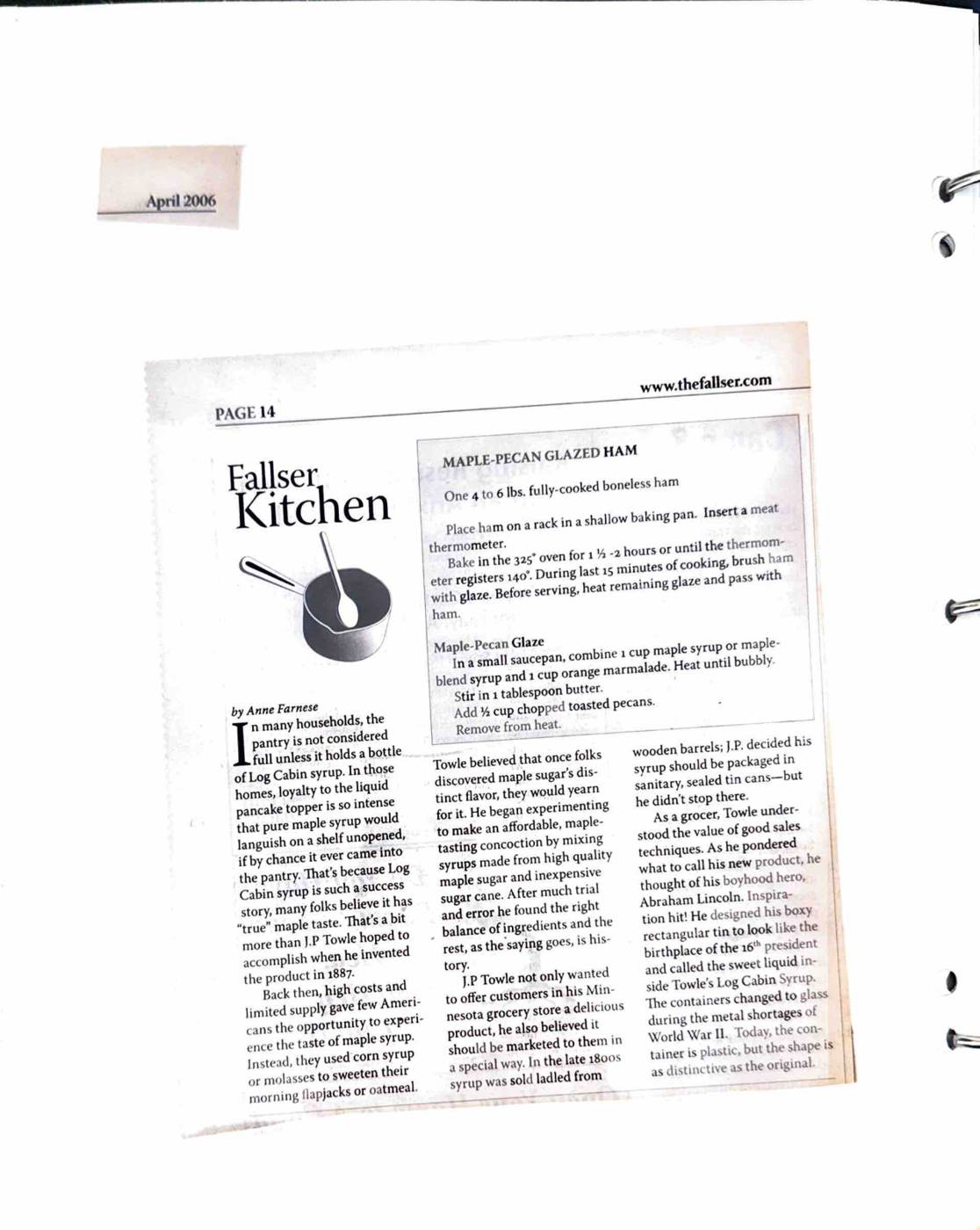
In many households, the pantry is not considered full unless it holds a bottle of Log Cabin syrup. In those homes, loyalty to the liquid pancake topper is so intense that pure maple syrup would languish on a shelf unopened, if by chance it ever came into the pantry. That's because Log Cabin syrup is such a success story, many folks believe it has "true" maple taste. That's a bit more than J.P Towle hoped to accomplish when he invented the product in 1887.
Back then, high costs and limited supply gave few Americans the opportunity to experience the taste of maple syrup. Instead, they used corn syrup or molasses to sweeten their morning flapjacks or oatmeal. Towle believed that once folks discovered maple sugar's distinct flavor, they would yearn for it. He began experimenting to make an affordable, maple-tasting concoction by mixing syrups made from high quality maple sugar and inexpensive sugar cane. After much trial and error he found the right balance of ingredients and the rest, as the saying goes, is history.
J.P Towle not only wanted to offer customers in his Minnesota grocery store a delicious product, he also believed it should be marketed to them in a special way. In the late 1800s syrup was sold ladled from wooden barrels; J.P. decided his syrup should be packaged in sanitary, sealed tin cans—but he didn't stop there.
As a grocer, Towle understood the value of good sales techniques. As he pondered what to call his new product, he thought of his boyhood hero, Abraham Lincoln. Inspiration hit! He designed his boxy rectangular tin to look like the birthplace of the 16th president and called the sweet liquid inside Towle's Log Cabin Syrup. The containers changed to glass during the metal shortages of World War II. Today, the container is plastic, but the shape is as distinctive as the original.
Maple-Pecan Glazed Ham
Ingredients
- One 4 to 6 lbs. fully-cooked boneless ham
Directions
- Place ham on a rack in a shallow baking pan. Insert a meat thermometer.
- Bake in the 325° oven for 1 ½ -2 hours or until the thermometer registers 140°. During last 15 minutes of cooking, brush ham with glaze. Before serving, heat remaining glaze and pass with ham.
Maple-Pecan Glaze
- In a small saucepan, combine 1 cup maple syrup or maple-blend syrup and 1 cup orange marmalade. Heat until bubbly.
- Stir in 1 tablespoon butter.
- Add ½ cup chopped toasted pecans.
- Remove from heat.
View the original clipping
ingredients-spotlight meat holidays