Fallser Kitchen · October 2008
Election cake history
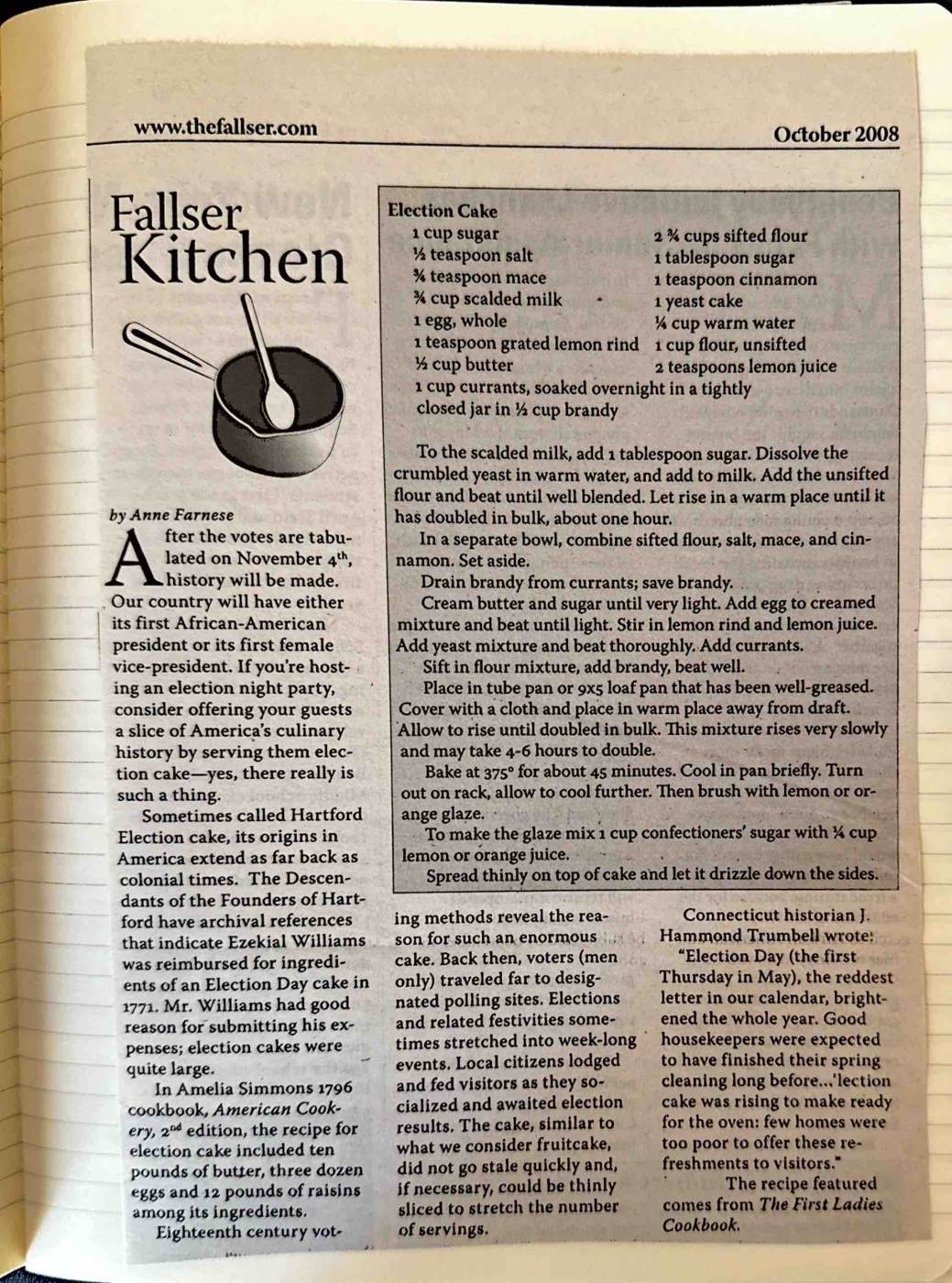
After the votes are tabulated on November 4th, history will be made. Our country will have either its first African-American president or its first female vice-president. If you're hosting an election night party, consider offering your guests a slice of America's culinary history by serving them election cake—yes, there really is such a thing.
Sometimes called Hartford Election cake, its origins in America extend as far back as colonial times. The Descendants of the Founders of Hartford have archival references that indicate Ezekial Williams was reimbursed for ingredients of an Election Day cake in 1771. Mr. Williams had good reason for submitting his expenses; election cakes were quite large.
In Amelia Simmons 1796 cookbook, American Cookery, 2nd edition, the recipe for election cake included ten pounds of butter, three dozen eggs and 12 pounds of raisins among its ingredients.
Eighteenth century voting methods reveal the reason for such an enormous cake. Back then, voters (men only) traveled far to designated polling sites. Elections and related festivities sometimes stretched into week-long events. Local citizens lodged and fed visitors as they socialized and awaited election results. The cake, similar to what we consider fruitcake, did not go stale quickly and, if necessary, could be thinly sliced to stretch the number of servings.
Connecticut historian J. Hammond Trumbell wrote: "Election Day (the first Thursday in May), the reddest letter in our calendar, brightened the whole year. Good housekeepers were expected to have finished their spring cleaning long before...'lection cake was rising to make ready for the oven: few homes were too poor to offer these refreshments to visitors."
The recipe featured comes from The First Ladies Cookbook.
Election Cake
Ingredients
- 1 cup sugar
- ½ teaspoon salt
- ¾ teaspoon mace
- ¾ cup scalded milk
- 1 egg, whole
- 1 teaspoon grated lemon rind
- ½ cup butter
- 1 cup currants, soaked overnight in a tightly closed jar in ½ cup brandy
- 2 ¾ cups sifted flour
- 1 tablespoon sugar
- 1 teaspoon cinnamon
- 1 yeast cake
- ¼ cup warm water
- 1 cup flour, unsifted
- 2 teaspoons lemon juice
Directions
- To the scalded milk, add 1 tablespoon sugar. Dissolve the crumbled yeast in warm water, and add to milk. Add the unsifted flour and beat until well blended. Let rise in a warm place until it has doubled in bulk, about one hour.
- In a separate bowl, combine sifted flour, salt, mace, and cinnamon. Set aside.
- Drain brandy from currants; save brandy.
- Cream butter and sugar until very light. Add egg to creamed mixture and beat until light. Stir in lemon rind and lemon juice. Add yeast mixture and beat thoroughly. Add currants.
- Sift in flour mixture, add brandy, beat well.
- Place in tube pan or 9x5 loaf pan that has been well-greased. Cover with a cloth and place in warm place away from draft. Allow to rise until doubled in bulk. This mixture rises very slowly and may take 4-6 hours to double.
- Bake at 375° for about 45 minutes. Cool in pan briefly. Turn out on rack, allow to cool further. Then brush with lemon or orange glaze.
- To make the glaze mix 1 cup confectioners' sugar with ¼ cup lemon or orange juice.
- Spread thinly on top of cake and let it drizzle down the sides.
View the original clipping
baking holidays desserts