Fallser Kitchen · July 2012
History of mayonnaise
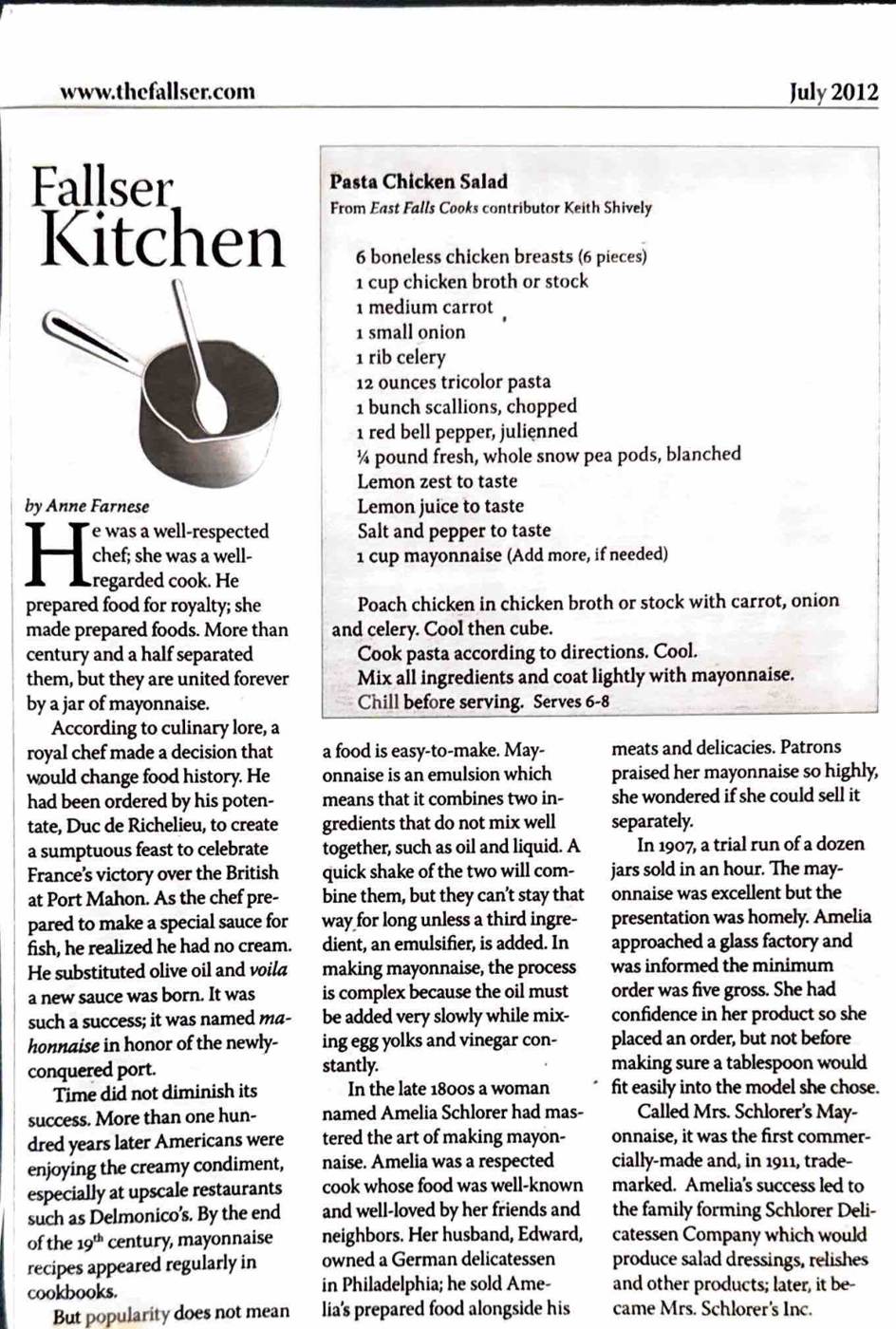
He was a well-respected chef; she was a well-regarded cook. He prepared food for royalty; she made prepared foods. More than century and a half separated them, but they are united forever by a jar of mayonnaise.
According to culinary lore, a royal chef made a decision that would change food history. He had been ordered by his potentate, Duc de Richelieu, to create a sumptuous feast to celebrate France's victory over the British at Port Mahon. As the chef prepared to make a special sauce for fish, he realized he had no cream. He substituted olive oil and voila a new sauce was born. It was such a success; it was named mahonnaise in honor of the newly-conquered port.
Time did not diminish its success. More than one hundred years later Americans were enjoying the creamy condiment, especially at upscale restaurants such as Delmonico's. By the end of the 19th century, mayonnaise recipes appeared regularly in cookbooks.
But popularity does not mean a food is easy-to-make. Mayonnaise is an emulsion which means that it combines two ingredients that do not mix well together, such as oil and liquid. A quick shake of the two will combine them, but they can't stay that way for long unless a third ingredient, an emulsifier, is added. In making mayonnaise, the process is complex because the oil must be added very slowly while mixing egg yolks and vinegar constantly.
In the late 1800s a woman named Amelia Schlorer had mastered the art of making mayonnaise. Amelia was a respected cook whose food was well-known and well-loved by her friends and neighbors. Her husband, Edward, owned a German delicatessen in Philadelphia; he sold Amelia's prepared food alongside his meats and delicacies. Patrons praised her mayonnaise so highly, she wondered if she could sell it separately.
In 1907, a trial run of a dozen jars sold in an hour. The mayonnaise was excellent but the presentation was homely. Amelia approached a glass factory and was informed the minimum order was five gross. She had confidence in her product so she placed an order, but not before making sure a tablespoon would fit easily into the model she chose.
Called Mrs. Schlorer's Mayonnaise, it was the first commercially-made and, in 1911, trademarked. Amelia's success led to the family forming Schlorer Delicatessen Company which would produce salad dressings, relishes and other products; later, it became Mrs. Schlorer's Inc.
Pasta Chicken Salad
From East Falls Cooks contributor Keith Shively
Ingredients
- 6 boneless chicken breasts (6 pieces)
- 1 cup chicken broth or stock
- 1 medium carrot
- 1 small onion
- 1 rib celery
- 12 ounces tricolor pasta
- 1 bunch scallions, chopped
- 1 red bell pepper, julienned
- ¼ pound fresh, whole snow pea pods, blanched
- Lemon zest to taste
- Lemon juice to taste
- Salt and pepper to taste
- 1 cup mayonnaise (Add more, if needed)
Directions
- Poach chicken in chicken broth or stock with carrot, onion and celery. Cool then cube.
- Cook pasta according to directions. Cool.
- Mix all ingredients and coat lightly with mayonnaise.
- Chill before serving.
Serves 6-8
View the original clipping
condiments-sauces salads ingredients-spotlight