Kitchen Corner · November 2024 · Column #79
Sage — the dominate aroma for the Thanksgiving holiday
As Thanksgiving cooks prepare the holiday feast, a swirl of aromas from the meal's ingredients permeate the household; the distinctive scent of sage dominates.
Indeed, the fragrant, pungent herb is an essential ingredient in poultry seasoning and it is what makes traditional bread stuffing taste, well, like stuffing.
Ancient cultures used sage medicinally. Its botanical name, Salvia officinalis, is derived from the Latin "salvere," meaning be well and officinalis from the Latin "officina," which was a room in a monastery where herbs and medicines were stored.
In medieval times, a medical school in Salerno, Italy promulgated the adage, "He who has sage in the garden shall never die." It's documented that for hundreds of years sage was used for healing.
Oil derived from sage leaves has antiseptic properties and is useful for cuts and mouth irritations. Sage tea is a soothing remedy for sore throat. It's believed that sage eases digestion of fatty foods.
Another belief concerning sage is that it strengthens memory, which is why a wise person is called a "sage"
Thanksgiving vegetables such as corn, potatoes and squash drizzled with sage butter are delicious. To prepare, add some chopped sage leaves to a half-cup of melted butter. Keep in mind the adage, less is more as too much sage will overpower instead of enhance.
Fresh sage is available year round. Store in a plastic bag for up to a week.
Kitchen Corner extends good wishes for a pleasant Thanksgiving.
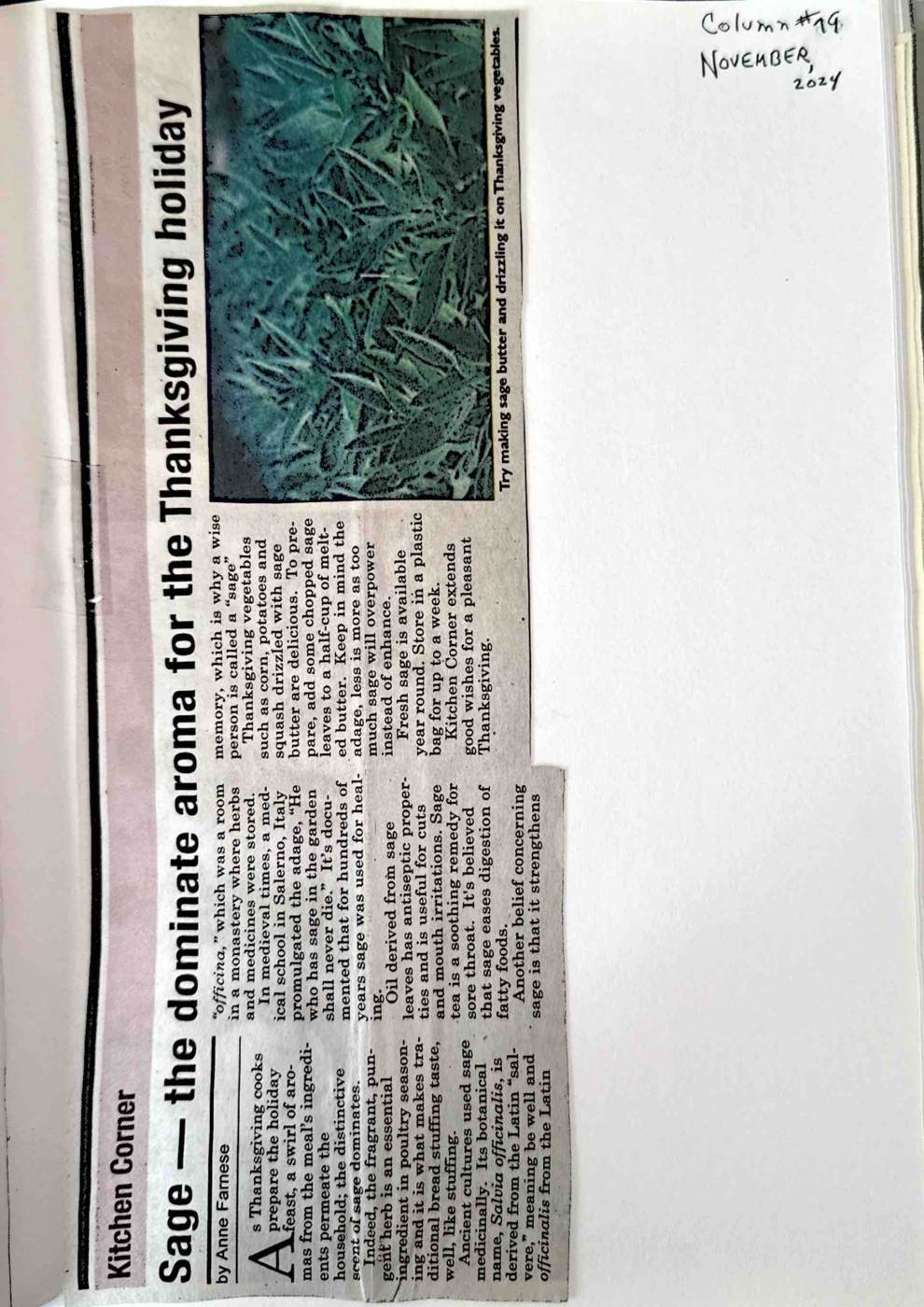
[Photo caption: Try making sage butter and drizzling it on Thanksgiving vegetables.]
View the original clipping
ingredients-spotlight holidays techniques-tips